When we think of the late 2000s netbook craze, the mind immediately jumps to chunky, plastic Asus Eee PCs or Acer Aspires running Windows XP. They were cheap, cheerful, and everywhere. But in 2009, a mobile giant stepped into the arena and delivered something entirely different: the Nokia Booklet 3G.
Here at OSfOM, we love hardware that pushes boundaries or challenges the status quo. The Booklet 3G was exactly that—a fascinating, brief excursion by Nokia into the PC market, built with the DNA of a premium smartphone.
🛠️ Engineering a Mini-Masterpiece
Instead of glossy, creaky plastic, Nokia crafted the Booklet 3G out of a single block of aircraft-grade aluminum. It was fanless, completely silent, and featured a stunning glass-covered 10.1-inch display with a resolution of 1280x720—a massive step up from the standard 1024x600 screens of its competitors.
The core specs of 2009:
- Processor: Intel Atom Z530 (1.6 GHz) – Fanless and highly efficient … and sloooow :).
- Memory: 1 GB DDR2 RAM (Soldered, sadly!)
- Storage: 120 GB 1.8-inch hard drive.
- Connectivity: Wi-Fi, Bluetooth, built-in GPS, and the namesake 3G modem with a hot-swappable SIM card slot on the side.
- Battery Life: A jaw-dropping 12 hours.
It was essentially an ultrabook before ultrabooks were a defined category. You could take it anywhere, pop in a SIM card, and stay connected without the hassle of early, battery-draining mobile tethering.
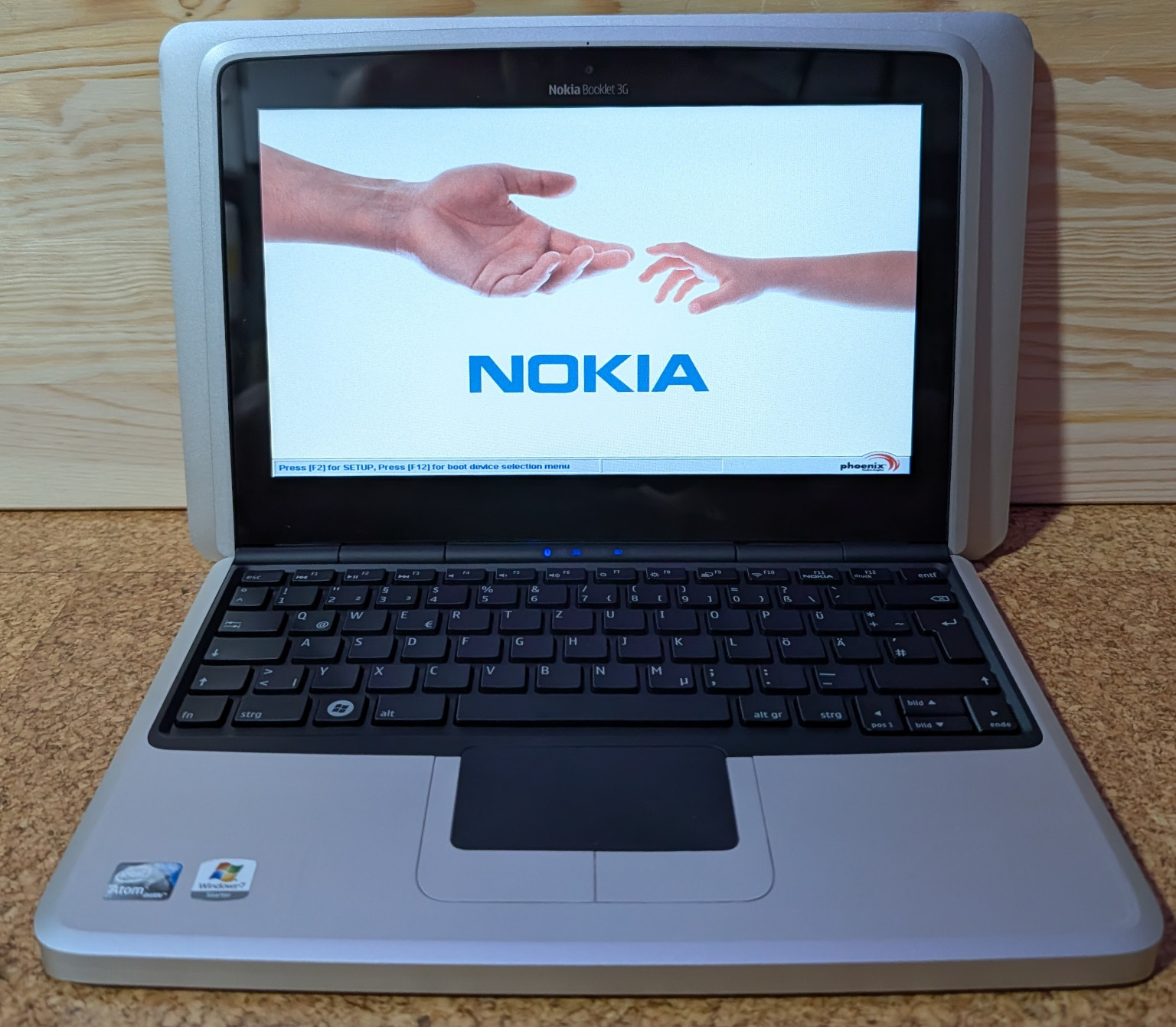
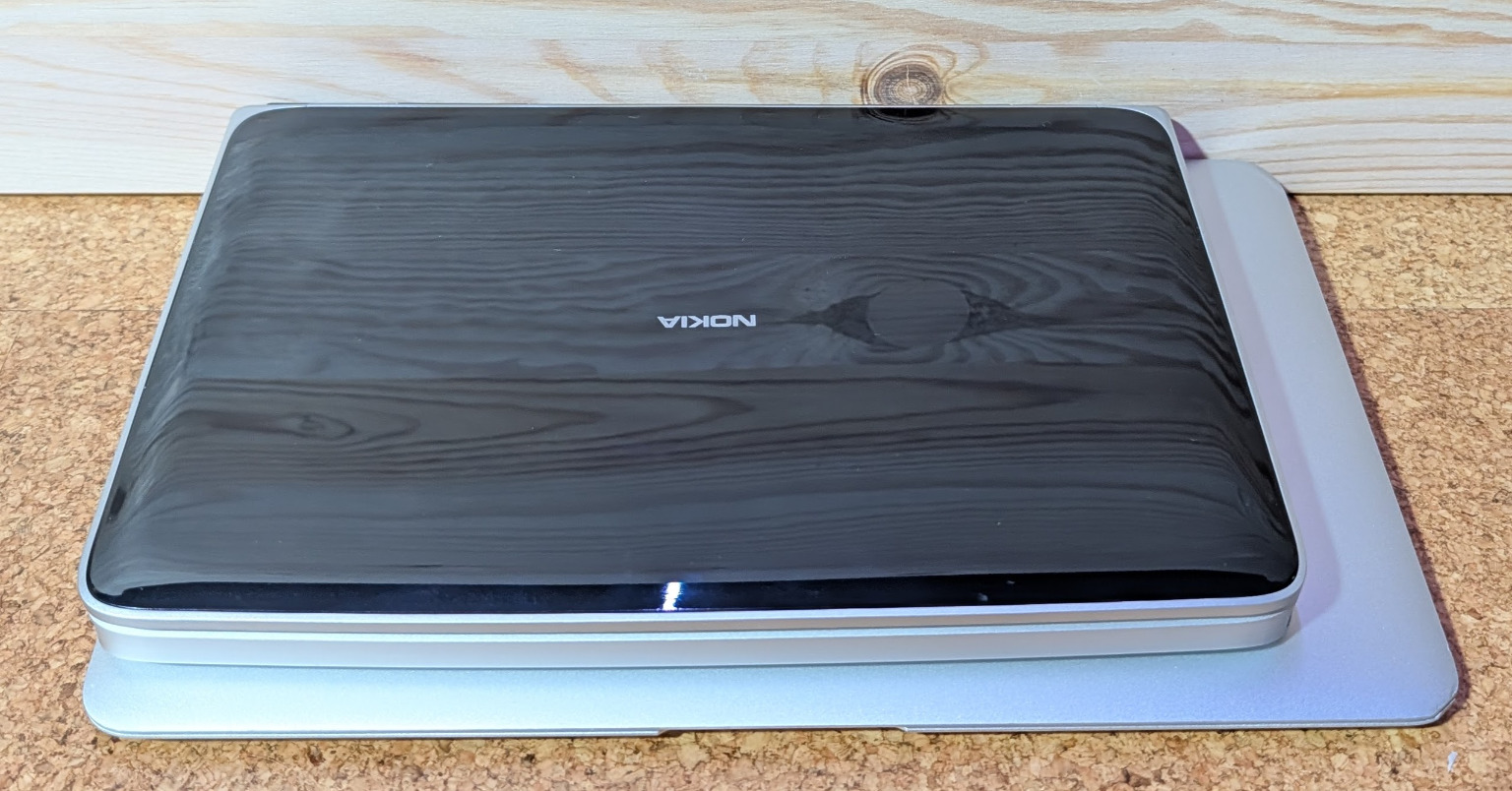
Size comparisom with MacBook 11"
🐧 A Perfect Canvas for Open Systems: Enter antiX Linux
Out of the box, the Booklet 3G was crippled by Microsoft’s notoriously sluggish Windows 7 Starter edition. The heavy OS, combined with the anemic 1GB of RAM and the slow 1.8-inch spinning drive, meant performance was often a frustrating experience.
But that is exactly what makes it such a brilliant machine for the retro and open-source community in 2026. Stripping away Windows 7 and replacing it with a truly lightweight OS breathes entirely new life into this beautiful chassis. For our OSfOM machine, we specifically installed antiX Linux.
Because antiX is designed for older hardware and runs completely systemd-free, it is the absolute silver bullet for the Atom Z530 processor. It idles at a fraction of the RAM that modern distributions require. Swap in a SSD, boot up antiX with a lean window manager (like IceWM), set your terminal background to a sleek, deep purple accent color to make that glass screen pop, and you suddenly have a dead-silent, incredibly stylish portable console for SSH sessions, writing, and retro-web browsing.
💡 The Legacy
The Nokia Booklet 3G was too expensive for the netbook crowd and too underpowered for the premium laptop crowd, making it a commercial rarity. Yet, holding one today, you can't help but admire the build quality. It feels like a device that was slightly ahead of its time, dreaming of an always-connected, fanless future that we now take for granted.
Do you have a Nokia Booklet 3G in your collection? What operating system are you running on it today to keep this aluminum beauty alive? Let me know!